
Before buying shapewear, put on the outfit you want to improve and name the problem. Is a waistband showing through? Are thigh seams catching under a skirt? Or would a different cut of clothing solve the issue without another layer?
The best shapewear for crossdressers is optional equipment for a particular outfit—not a requirement for your body. Choose the area you want to smooth, the construction that suits it, and a size you can comfortably move in.
Choose by the area, not the strongest label
| Your aim | Consider | Look closely at |
|---|---|---|
| Smoother waistband or torso line | Shaping briefs | Waist height and where the leg openings sit |
| Fewer breaks between layers | A smoothing bodysuit | Torso length, neckline and bathroom access |
| A smoother upper-thigh line | Shaping shorts | Leg length and whether the hem shows |
| A defined outerwear detail | An outfit-specific structured garment | Its own fitting and wear instructions |
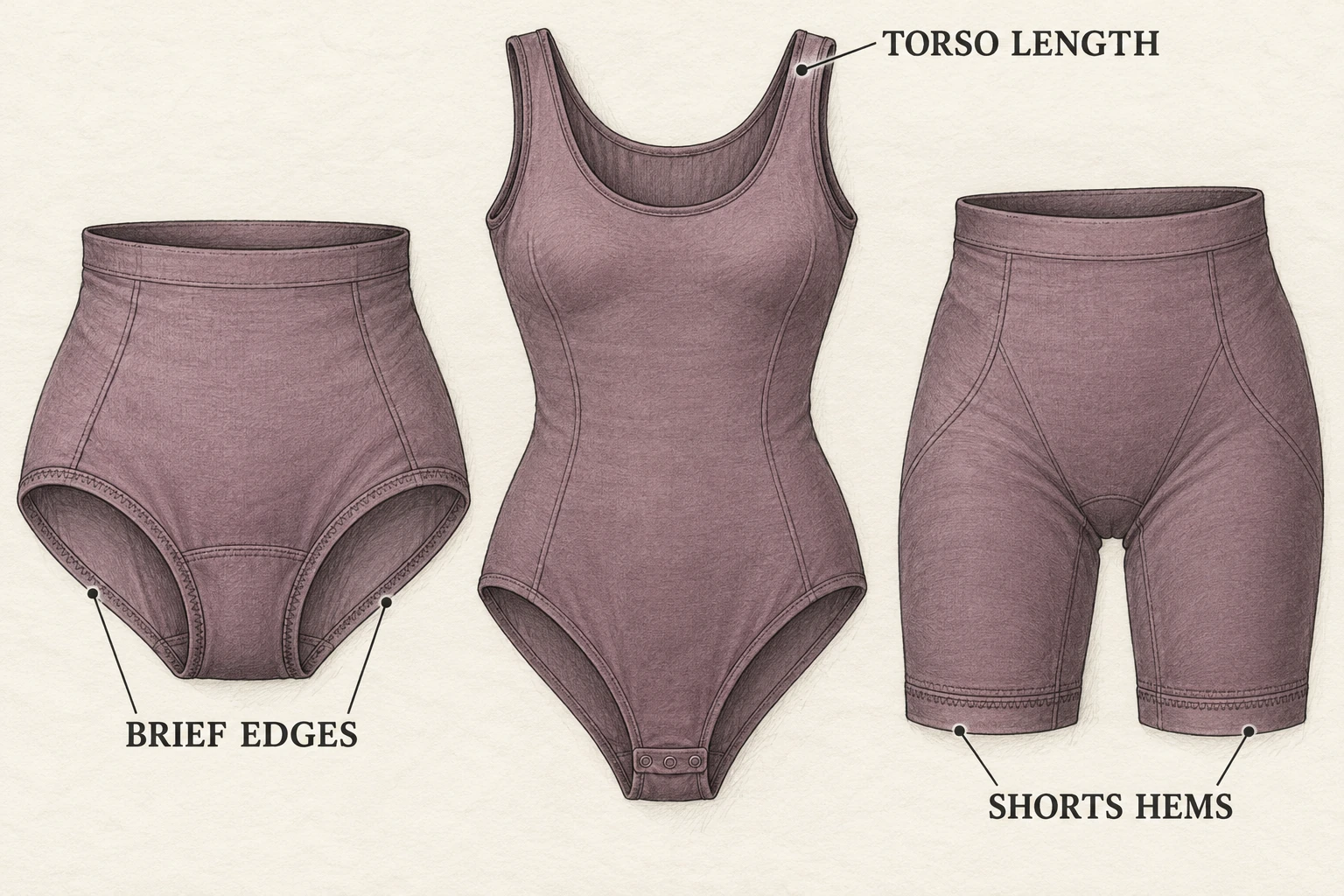
Briefs: check the edges as well as the middle
High-waisted shaping briefs may help create the line you want at the torso, but the waistband and leg openings can become visible under close-fitting fabric. Try the whole outfit and check where each edge falls.
If the waistband repeatedly rolls, do not immediately buy a smaller size. Look at the garment’s height, your measurements and how it behaves when you sit. A different construction may be more useful than stronger compression.
Bodysuits: torso length changes the fit
A bodysuit connects more of the outfit’s foundation, but its length matters. If it pulls at the shoulders or lower fastening, check the size and proportions rather than trying to tolerate the tension.
Think about your bra, neckline and bathroom routine before ordering. A garment that looks smooth in a standing photograph may be awkward to manage at an event. Read whether the bust is open, built in or intended for a particular bra arrangement.
Shorts: test under the actual skirt or dress
Check leg length and how the fabric moves. A hem that sits just above a visible skirt opening can appear when you walk or sit. A very tight edge can also create a line where you were hoping to remove one.
Try the outfit in ordinary light and while moving. “Seamless” is a construction description, not a promise that a garment will be invisible through every fabric.

Use the maker’s size chart
- Measure the areas the brand asks for, in its stated units.
- Check torso length as well as waist and hips when buying a bodysuit.
- Read what the maker means by light, medium or firm shaping.
- Check fabric, openings, laundering instructions and exchange restrictions.
- Do not deliberately size down to force a stronger result.
You should be able to breathe, sit and move comfortably. Remove a garment that causes pain, numbness, tingling or breathing difficulty and reassess it. Cleveland Clinic’s shapewear advice explains why fit and skin irritation matter; if you have a health condition affected by compression, ask your clinician about your circumstances.
Shapewear is not the same as a corset
A structured corset has its own fitting and use requirements. Do not treat it as simply the next stronger level of ordinary smoothing underwear, or expect any of these garments to permanently change your body.
If a corset is part of an outfit you want to explore, our corset selection guide provides a starting point for those separate choices.
A try-on that helps you decide
- Compare the same outfit. Check it without the shaping layer first, then with the proposed garment. Decide whether the layer solves the line you noticed or adds new edges.
- Sit, stand, walk and reach. Check waistband rolling, leg hems, shoulder pull and breathing comfort. Do not judge only from a standing mirror view.
- Check practical access. Make sure the bodysuit fastening, underwear and outer clothing work together for the bathroom.
- Make a specific decision. Keep a comfortable improvement; reconsider the height, length or cut if the garment creates a new problem. Do not use a smaller size to force the result.
Example: shorts smooth the upper thigh but the hem appears below the skirt when you sit. The next thing to investigate is a different shorts length, skirt or underwear—not automatically firmer compression.

Try one piece before building a collection
Choose the garment that addresses your actual outfit problem, then test it at home with your underwear and shoes. Note what improved and what introduced a new issue. If it only solves the look while standing still, keep looking.
Sometimes the easier answer is different underwear, a lining or a different dress cut. The lingerie guide and fashion guide can help you compare those options.
Shapewear questions
Do I need shapewear to crossdress?
No. Use it only if you enjoy the effect and the garment suits your comfort and outfit.
Should I buy a size smaller?
Use your measurements and the maker’s chart. A smaller label is not a reliable way to get a better result.
What if the outfit still shows lines?
Check garment edges, fabric thickness and the layers above it. Stronger shaping does not necessarily solve a construction or clothing-fit issue.
The aim is a foundation you can enjoy wearing, not a garment you spend the evening waiting to take off.
Read next
- Choosing a corset — Consider fit and styling before buying a shaping layer.
- Lingerie that fits and flatters — Build a comfortable foundation before adding more layers.
- Styling outfits with breastforms — Bring necklines, fabrics and foundations into one look.
